· 13 min read
Hotel Remarketing: Win Back Visitors Who Didn't Book
Hotel remarketing shows ads to people who visited your site but didn't book. Learn how retargeting works, what to set up, and how to turn visits into direct stays.
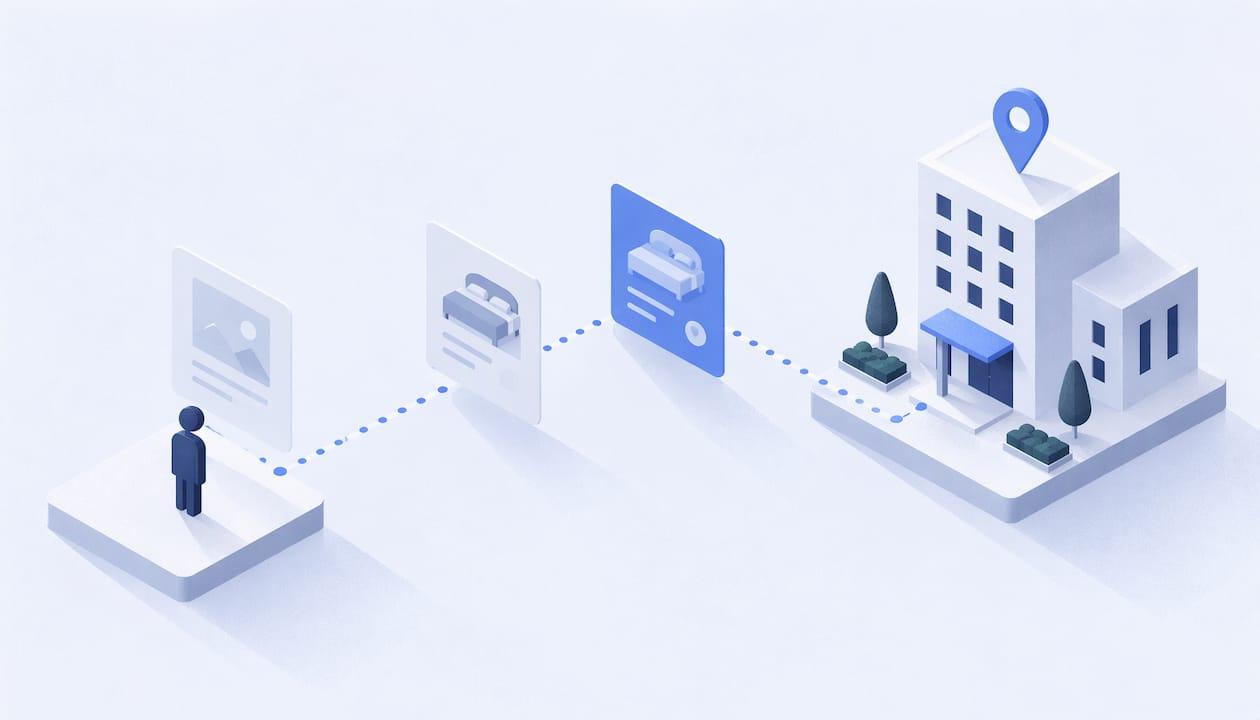
Hotel remarketing means showing ads, emails, or posts to people who already looked at your hotel but left without booking. Most visitors leave. Remarketing gives your hotel a second chance to be the one they book, so the stay lands on your own site and not on an online travel agency (OTA) that charges a commission. It works best when it sits inside a full direct booking plan, and that is how we build it at HotelHero.
If you also hear it called hotel retargeting ads, it is the same idea. This guide explains how it works, what to set up first, how to write ads that get clicks, and how to measure results. It is written for independent hotel owners and managers, not for big chains with large teams.
Free with every demo
Get a website guests and AI both recommend.
- See your new AI-visible website on the call
- Social content made and posted for you
- The website is yours to keep, free
Key Takeaways
- Remarketing targets people who already showed interest: site visitors, past guests, and people who started a booking.
- A direct booking costs far less than an OTA booking. One industry report put direct distribution at about 3.5% of room revenue, against 12% to 28% for OTA commissions.
- You need three things before you spend on ads: a fast site, a working booking path, and tracking that records who visited.
- Start small with three audiences: abandoned bookings, recent visitors, and past guests. Add more once those pay off.
- Ads alone do not fix a weak site or a weak Google listing. Remarketing works best as one part of a direct booking system.
What hotel remarketing is, in plain words
Picture a traveler in October. She searches for a weekend stay in your town. She opens your site, looks at two room photos, and gets a text from a friend. She closes the tab. Two days later she opens an OTA and books a room there. You paid a commission for a guest who had already found you.
Remarketing is how you stay in front of her. A small piece of tracking code on your site notes that she visited. Ad platforms can then show her your hotel again while she scrolls social media or browses other sites. Google explains the basic idea in its help page on remarketing: you reach people who visited your site by showing them ads as they use other sites and apps.
The words “remarketing” and “retargeting” are used in many ways. Many people say retargeting for paid ads and remarketing for email. In this guide we use remarketing for the whole idea: any follow-up to someone who already knows your hotel.

Why it matters for independent hotels
Most people who visit a hotel site do not book on the first visit. Travelers compare, get distracted, and come back later, often on a different device. If you do nothing, the OTAs will happily follow them.
The cost gap is the reason this matters. A February 2025 report from a hotel distribution firm, as summarized in an email marketing guide, put the average cost of direct distribution at 3.5% of room revenue. OTA commissions in the same comparison ran from 12% to 28%. Rates vary by hotel and contract, so check your own agreements. But the gap is big enough that even a small number of recovered bookings matters.

Here is a simple example. Say a guest would book a $240 stay. At a 15% commission, the OTA keeps $36. If remarketing brings that guest back to your own site, you keep that $36, minus the ad cost. If the ad cost per booking is lower than the commission, you came out ahead. You may also gain a guest you can email again.
The three audiences to build first
Do not try to chase everyone. Start with three groups. Each one needs a different message.
1. People who started a booking and left
These guests are the warmest. They picked dates and maybe a room, then stopped. A good reminder can be short: the dates they looked at, the room type, and one reason to book direct. Show these ads for a short window, such as the next few days to two weeks, because their interest fades fast.
2. Recent site visitors
These people looked around but never got to the booking page. They may not be sure yet. Show them what makes your hotel different: your best photos, a guest review, a local event, or a walking distance to a favorite spot. Keep the message simple and the photo strong.
3. Past guests
Past guests already know you. They cost the least to win back. You can reach them through email and through social media ads that use your guest list. Remind them of seasonal events, offer a direct-only perk, and make rebooking easy. Many hotels forget this group because it feels less exciting than finding new guests, yet it is often the cheapest group to reach.
What to set up before you spend a dollar
Remarketing sends people back to your site. If the site is slow, confusing, or hard to book on a phone, you will pay to send people to a page that loses them again. Check these basics first.
- A booking path that works on a phone. Most travelers browse on mobile. Book a test room yourself from start to finish on your phone. Count the taps. Fewer is better.
- Fast pages. If a page takes too long to load, people leave. Compress big photos and remove extra scripts.
- Clear prices and a direct-booking reason. Say plainly why booking direct is better: a perk, a flexible policy, or a better room choice. Our guide on how hotels get more direct stays covers what a strong direct booking site needs.
- Tracking. Install the ad platform tags on your site, and check that the booking confirmation page is tracked too. Without that, you cannot tell which ads led to stays.
- A privacy notice and consent tools. Remarketing uses visitor data. Make sure your site tells visitors what you collect, and follow the privacy rules that apply to you. If you have questions about a specific rule, ask a lawyer who handles privacy law.
If your site needs work first, our guide to a hotel website redesign walks through the simple fixes.
How to run hotel remarketing, step by step
Step 1: Pick one goal
Your goal should be one number, such as direct bookings from remarketing ads in a month. Resist the urge to track ten things. One goal keeps you honest.
Step 2: Install tracking and build audiences
Add the tags from your ad platform to every page. Then create the groups described above: booking starters, recent visitors, and past guests. Set a time limit for each. Booking starters might be seven days. Visitors might be thirty. Past guests can be longer.
Where it goes wrong: tags placed on only some pages, or no tag on the confirmation page. Then your audience includes people who already booked, and you waste money showing them ads for a stay they already have. Always exclude people who booked.
Step 3: Choose where the ads show
Two places work well for most independent hotels:
- Social media feeds. People are in a leisure mindset, and photos do the work.
- Search and display ads from Google. These follow visitors across sites and apps, and can appear when they search again.
Start with one place. Add the second when you have a stable cost per booking.
This is where having a plan for your social media matters. A feed full of ads and no real posts looks thin. When a traveler taps your profile after seeing an ad, they should find real photos, local content, and guest stories. Our social media management service is built around growing a guest audience and direct booking funnels, so the ad and the profile support each other.
Step 4: Write ads people notice
Good hotel remarketing ads are simple. Use one photo, one line, and one button. Ideas that work:
- Dates they searched. “Still thinking about the weekend of the 14th? Rooms are open.”
- A direct-only perk. Free parking, a late checkout, a welcome drink.
- A local reason to come. A food festival, a game, a concert, or a holiday market. Local events give people a reason to act now.
- Guest proof. A short review and a real guest photo. User-created photos and stories feel more honest than studio shots. This is why we offer user generated content and social media marketing to hotels.
Avoid long text, small print, and vague claims like “best rates.” Only promise what your booking page shows.
Step 5: Set a small budget and a frequency limit
Remarketing audiences are small, so you do not need a big budget. A few dollars a day can be enough to learn. Set a frequency cap, which limits how often one person sees your ad. If a guest sees the same ad ten times in a day, it feels like stalking, and they may block you.
Step 6: Send guests to a matching page
If the ad shows a room, the click should land on that room, with dates filled in if possible. A mismatch between ad and page is one of the most common reasons clicks do not turn into bookings.
Step 7: Measure, then adjust
Look at these numbers every month:
| Number | What it tells you |
|---|---|
| Cost per direct booking | Whether ads cost less than the commission you would pay |
| Click rate | Whether your photo and line grab attention |
| Bookings from ads | Whether the booking path works |
| Share of bookings that are direct | Whether your overall plan is working |
Change one thing at a time, such as the photo or the offer, so you know what caused the result.
Email: the quiet remarketing channel
Email is remarketing too. It reaches people who gave you their address, which makes it one of the lowest-cost ways to bring guests back.
Two simple flows are worth setting up:
- Booking reminder. If a guest leaves the booking page after entering an email, send a note the same day, then a second one a day later. One guide on hotel email says a two-step recovery flow can win back a share of lost bookings, with numbers up to 18% mentioned in that guide. Treat that as a ceiling, not a promise. Your result will depend on your hotel and your list.
- Past guest note. Send a short, friendly email before the season you know fills slowly. Offer a direct-only perk.
Keep emails short and personal. A subject line with the guest’s dates or a local event beats a generic “Special offer.”
Remarketing is not enough on its own
Ads bring people back, but they cannot fix everything. Think of the whole path a traveler takes:
- They find you, on Google, on social media, or in an AI answer.
- They check your reviews, photos, and listing details.
- They visit your site.
- They book, or they leave.
- If they leave, remarketing brings them back.
Remarketing only handles step five. If steps one and two are weak, there are fewer visitors to bring back, and those who see your reviews or your Google listing may lose trust before they ever reach your site. So the best use of ad money is often to fix the front of the path first, then run remarketing on top.
That is why a few things matter alongside ads:
- A complete Google Business Profile. Right hours, photos, a working booking link, and fast replies to reviews.
- Clean OTA listings. Make sure your photos and descriptions match your own site, and point travelers to book direct.
- Good reviews. Ask happy guests to post, and reply to every review.
- Visibility in AI search. More travelers now ask AI tools for hotel ideas. Your site needs clear, factual content that those tools can read, such as who you are, where you are, and what you offer. This is what generative engine optimization (GEO) is about. It means shaping your content so AI answers can find and use it.
Our guide to independent hotel marketing shows how these pieces fit into one direct booking plan.
Group bookings: a remarketing chance most hotels miss
Remarketing is not only for leisure guests. Think about the people who ask about group rates, such as work crews, sports teams, and wedding parties. They often send an inquiry and then go quiet while they talk to others. A quick, personal follow-up can make the difference.
That follow-up is sales work, not just ads. It takes a person who calls back, sends a clear quote, and checks in again. Many independent hotels have no one with the time to do it. We offer a remote sales team for group bookings, and we are adding construction crew prospecting so hotels can reach crews that need rooms for weeks at a time.
If your phone is a big source of bookings, read our guide on a hotel reservation call center to see how calls can turn into bookings.
Common mistakes to avoid
- Showing ads to people who already booked. Always exclude them.
- Running ads with no landing page match. The click should match the promise.
- Using the same ad for every audience. A past guest and a first-time visitor need different words.
- Ignoring the frequency cap. Too many views annoy people.
- Judging results too soon. Small audiences take weeks to give a clear picture. Wait for enough data before you change the plan.
- Skipping the basics. A slow site wastes the clicks you pay for.
- Forgetting privacy. Tell visitors what you collect and why.
How to tell if remarketing is working
A simple test is to compare the cost of one direct booking from ads to the commission you would have paid. Say your average stay is $240 and your OTA commission is 15%. That is $36. If your remarketing ads cost $20 for each booking, you saved $16 per stay, and you now have the guest’s contact details for later.
Also look at the bigger picture. Over a few months, is your direct share rising? Are repeat guests growing? Are phone calls and emails up? Remarketing should help all three.
A simple 30-day starter plan
Week 1: Fix the basics. Test your booking path on a phone. Install tags and check the confirmation page.
Week 2: Build your three audiences. Write three short ads, one per audience. Gather five good photos and two guest reviews.
Week 3: Launch with a small budget and a frequency cap. Send the first past-guest email.
Week 4: Review the numbers. Keep what works. Pause what does not. Plan the next season’s local events.
Our view on hotel remarketing
We think of remarketing as the last step of a path, not the first. A hotel gets the most from it when the path before it is strong.
Independent hotels do not have big marketing teams. That is why we combine an AI-visible website with a steady content plan, curated social media posts, and local event content that speaks to travelers. When a guest sees your ad and then finds a lively profile, good reviews, and a clear direct booking page, the click feels safe.
We also believe in people. A remote sales team for group bookings follows up with the guests who inquire, and social media management builds an audience of future guests before you ever pay to reach them. Online presence repair, including your Google Business Profile, OTA listings, and reviews, makes sure every visitor sees the same strong story.
Our goal is simple: more commission-free bookings, with a deployment guarantee of 30 days.
Chirag
Where HotelHero fits
If you want the whole path built for you, our Direct Booking System brings together a remote sales team for group bookings, targeted social media management, and online presence repair. For the AI search side, see our GEO and AEO services. Every service is designed to reduce OTA dependence and grow commission-free bookings.
FAQ
What is the difference between hotel remarketing and hotel retargeting ads?
The two terms are close and often used as one. Retargeting usually means paid ads that follow a visitor around the web. Remarketing is a wider word that also covers email to guests and past visitors. For a hotel, you want both.
How much should an independent hotel spend on remarketing?
Start small. Remarketing audiences are small, so a few dollars a day can be enough to learn what works. Set a monthly cap, compare your cost per booking with the OTA commission you would have paid, and raise the budget only when the numbers support it.
Do I need a new website before I start?
Not always, but the site must load fast, work well on a phone, and make booking simple. Ads that send people to a weak page waste money. If your booking path is hard to use, fix it first.
Can remarketing help with group bookings?
Yes, but groups need a person, not only an ad. Follow up fast on every inquiry with a clear quote and a call. Our remote sales team handles group booking outreach for independent hotels.
How long until I see results?
You can see clicks in days. Real booking data often needs several weeks, because audiences are small and trips are planned ahead. Judge your results over at least a month, and by season if your hotel has a busy and slow period.
Sources
- Google Ads Help: About remarketing
- Hotel email marketing guide, including the cost of direct distribution and booking recovery figures