· 10 min read
Hotel Content Marketing: A Plain Guide to More Direct Bookings
Learn what hotel content marketing is, which content types work, how to plan it, and how it helps independent hotels win direct bookings and cut OTA fees.
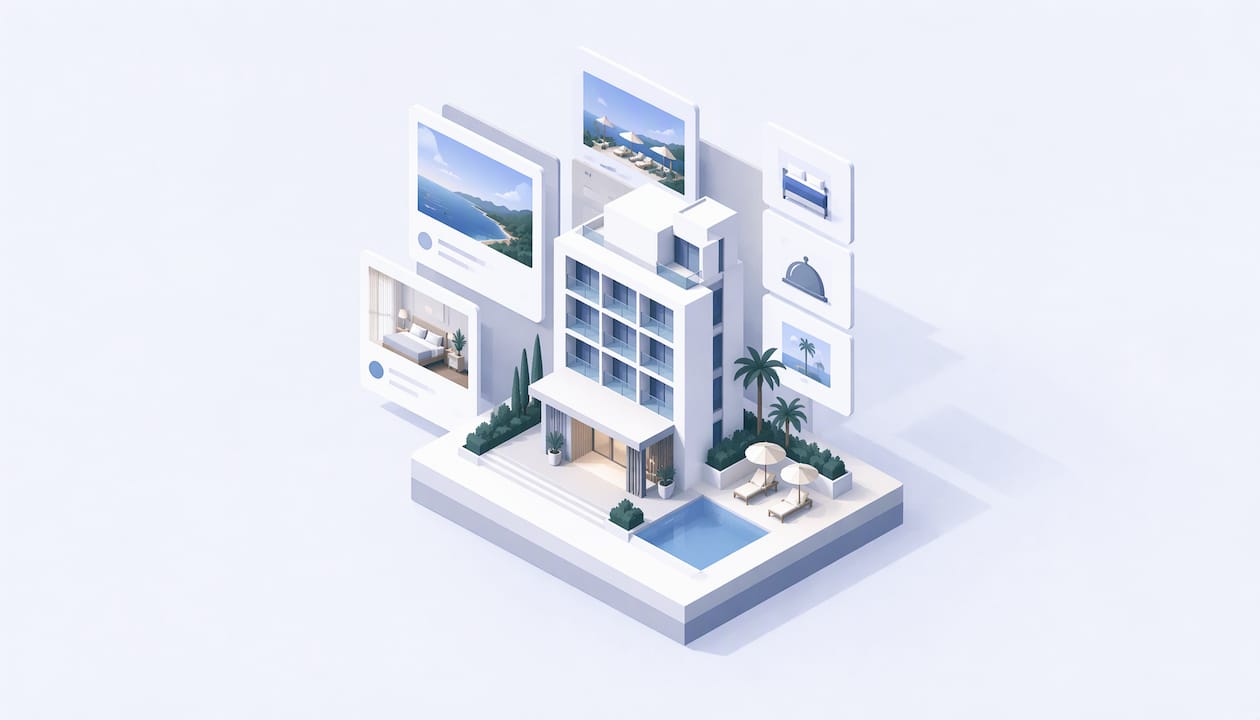
Hotel content marketing means sharing useful, interesting content about your hotel, your town and your guests’ trips, so travelers find you and book with you instead of an online travel agency (OTA). The best results come when content is tied to booking: every post, page and video leads to a clear next step on your own site. We built our services around that idea, and this guide shows you how to do it.
Free with every demo
Get a website guests and AI both recommend.
- See your new AI-visible website on the call
- Social content made and posted for you
- The website is yours to keep, free
Key Takeaways
- Hotel content marketing is content about your property, amenities, events and destination that builds interest without a hard sell, then guides travelers to book direct.
- Pick formats you can keep up: blog posts, short video, email and social posts. Video is underused by hotels, yet it earns outsized engagement.
- Give each piece one job and one call to action, such as booking, joining your email list or following your page.
- Plan content around the guest’s trip, from dreaming to booking, and make your content easy for both search engines and AI tools to understand.
- Consistency is the hard part for small teams. A service that handles planning, posting and online presence repair can take that weight off you.
What hotel content marketing is
Hospitality industry writer Max Starkov defines hotel content marketing as content about the property, its amenities, events and the destination, delivered to a targeted audience without an explicit price promotion. The goal is to spark interest and turn online travelers into bookers, often through Google rankings.
In plain words: you teach, show and inspire. You do not just shout “Book now, 20% off.” A traveler who reads your guide to fall foliage drives, or watches a short video of your breakfast room, starts to trust you. When they are ready to pick a place to sleep, you are the name they know.
That is why content matters so much for independent hotels. A chain has a famous brand. You have a story, a location and real people. Content is how you share them.
Why it helps cut OTA commissions
OTAs earn their fee by putting your hotel in front of travelers. Content lets you do the same job yourself. An EHL guide to hospitality content marketing says content marketing can lower your reliance on paid ads and OTAs, lets you control your own story and helps you reach the right type of traveler.
Every guest who finds you through your own content and books on your site is a booking with no OTA commission attached. Over a year, that adds up. Our own guide on how to increase hotel bookings shows how content fits with the other levers.
What kinds of content can a hotel make?
There is no shortage of options. Hospitality Net lists website content, SEO, PR, email, social posts, video, podcasts, infographics, blog articles, case studies, influencer marketing and more. It also lists “expert knowledge” content, such as tips from a golf pro, a chef or a spa specialist. You do not need all of them. Start with a few.
| Format | Best for | Effort |
|---|---|---|
| Blog posts and guides | Search traffic from people planning a trip | Medium |
| Short video | Social reach and showing the feel of your hotel | Medium to high |
| Social posts | Staying visible and sharing local events | Low to medium |
| Email newsletter | Past guests and people who joined your list | Low |
| Guest photos and reviews (UGC) | Trust and real proof | Low |
| Expert tips from staff | Showing your people and your skills | Low |
The EHL guide names the most relevant formats as blog content, social posts, YouTube videos, newsletters and podcasts. That matches the list above.
Video deserves more of your time
A December 2024 peer-reviewed study of hotel Instagram content found that hotels posted single images 41.2% of the time and video only 9.6% of the time. Yet video made up 23.31% of the posts studied and earned 47.12% of all likes. Video averaged 410 likes per post, compared with 108 for single images.

The same study found that sales-related posts, such as ones with a price or a booking link, got more likes per post than purely informative ones (351 versus 130). That challenges the old idea that any mention of price hurts engagement. A post with real personality that also tells people how to book can work well.
The lesson is simple. Mix inspiring content with clear booking paths. Our guide to hotel social media marketing goes deeper on this.
Guest content is a shortcut
User generated content (UGC) is content your guests make: photos, videos, reviews and tags. It costs little and feels real, because it comes from people who stayed with you. Ask guests to share, get permission before you reuse their posts, and give credit. We offer UGC and social media marketing for hotels that want this handled for them.

How to pick topics your guests care about
Good topics sit where three things meet: who your guests are, what your town offers and what is happening nearby. Here is a simple way to find them.
- List your top guest types. Couples on weekend trips, families at a nearby attraction, business travelers, wedding guests, work crews. Write one line on what each group wants.
- Write down their questions. Think of what the front desk hears all day: Where do we park? What is open late? Where is the best breakfast? Each answer can be a post or a page.
- Build an event calendar. Fairs, concerts, college move-in weekends, game days, holidays and festivals. People search for these, and they need a room.
- Use your own strengths. Does your chef make a famous dish? Is your hotel in an old building with a story? Share it.
- Think about the whole day. Even small moments, such as the morning cup of coffee, shape how guests remember a stay. A hotel coffee supplier guide maps guest moments like this, and it shows how small details can become content ideas.
For example, a 40-room hotel near a state university could build a fall plan: a parents’ weekend guide, a game-day shuttle video, a local diner spotlight and a post for each home game. Each piece answers a real question and points to the booking page.
Plan content around the guest’s trip
A traveler goes through stages before booking. Your content should meet them at each one.
- Dreaming: seasonal and destination content. “Best fall drives near our town.”
- Planning: how to get there, where to park, what to do on a two-day stay.
- Choosing: room pages, photos, reviews, policies and what makes you different.
- Booking: direct offers, perks for booking on your site and a simple booking button.
The last two stages matter most for direct bookings. Many hotels spend all their energy on pretty dreaming content and forget the choosing and booking pages. Make sure every guide links to a room or an offer, and make sure your booking button is easy to find on a phone. Our post on the direct booking website explains what a site needs so visitors turn into guests.
A simple hotel content marketing plan
Here are the steps, from start to finish.
1. Set one clear goal
Pick a goal you can count, such as more direct bookings from your website or more email sign-ups. A goal keeps you from posting just to post.
2. Choose two or three formats
Pick the formats you can keep up for a year. A blog post twice a month and three short videos a week beats a big burst that stops after a month.
3. Give each piece one call to action
The EHL guide recommends a single call to action per piece, such as booking, joining the mailing list or following on social. Too many asks confuse people.
4. Build a calendar
Map the year by season, local events and slow periods. Plan content for your weak nights first. A midweek offer post in a quiet month does more than another sunset photo.
5. Publish and share
Post on your website first, then share it on social and in email. Your own site is the asset you own. Social platforms can change their rules at any time.
6. Measure what matters
Likes feel good, but bookings pay the bills. Track how many visitors from each piece of content reach your booking page and how many book. Free tools such as Google Analytics can show which pages send people to your booking engine. Ask your booking engine provider how to connect the two so you can see the full path.
Make your content easy to find, in search and in AI answers
Travelers now ask AI tools such as ChatGPT and Google’s AI answers for trip ideas. These tools pull from content they can read and trust. This is called generative engine optimization (GEO), or AI engine optimization (AEO). It means writing and structuring your content so AI tools can understand it and mention your hotel.
You can help by doing these things:
- State plain facts on your site: your location, room types, amenities, pet policy, parking and who your hotel suits best.
- Write the way guests ask questions, with clear headings and short answers.
- Keep your name, address and phone number the same everywhere online.
- Keep your Google Business Profile complete, with fresh photos and answered reviews.
- Keep your listings on OTAs correct, so every channel tells the same story.
Our GEO and AEO service is built for this. Our online presence repair work covers Google Business Profile optimization, OTA listings management and review services, so the places travelers look all agree with your own site.
Where hotel teams get stuck
Most small hotels do not fail at ideas. They fail at keeping up. The general manager is also the head of sales and the person who answers the phone. Content slides to the bottom of the list.
Here is how to get around that:
- Batch your work. Shoot a month of video in one afternoon.
- Use a template. Keep one outline for event posts and one for room features.
- Share the load. Ask front desk staff for photos, the chef for a recipe and housekeeping for a before-and-after.
- Reuse. One local guide can become a blog post, an email, five social posts and a short video.
- Hand off the heavy parts. A content service can plan, create and post for you, so your team can focus on guests.
That last point is the reason many independent owners choose a partner. You still keep the voice of your hotel. Someone else handles the schedule.
What a hotel content creation service can do for you
A good service should cover the steps above: planning a calendar around your guests and local events, making the content, posting it and connecting it to your booking path. We combine curated social posts with an AI-visible website, so your content is seen by travelers and by AI tools. We also offer social media management to build your guest audience and your direct booking funnels.
If group business matters to you, content is only half the story. Our remote sales team works group bookings for independent hotels, and we are launching construction crew prospecting, which reaches crews who need rooms for long stays.
Our view: content should end in a booking
We talk with independent hotel owners who are tired of paying OTA commissions on guests they could have won themselves. The problem is rarely a lack of effort. It is a lack of time, and a lack of a system that connects content to a booking.
Our view is that content, sales and online presence should work as one machine. A post that sparks interest is wasted if your Google profile is out of date, your site is hard to read for AI tools or your booking page is slow. That is why our Direct Booking System brings together social media management, a remote sales team for group bookings and online presence repair.
We built it for independent hotels without a large marketing team. Our approach is designed to put commission-free direct bookings first, and we back it with a 30-day deployment guarantee.
Chirag
Chirag
Ready to put this to work?
If you want content that leads to direct bookings but have no team to run it, we can help. Our Direct Booking System pairs content, sales outreach and online presence repair for independent hotels. You can also read our independent hotel marketing playbook for the bigger picture, or get in touch to talk about your property.
FAQ
What is hotel content marketing?
It is the practice of creating helpful, interesting content about your hotel, amenities, events and destination. It avoids a hard sales pitch and aims to build interest. The goal is to turn online travelers into guests who book with you directly.
How often should a hotel post content?
Pick a pace you can keep for the whole year. Many small hotels do well with a few short social posts each week, one or two blog posts a month and a regular email. Consistency matters more than volume.
What type of content works best for hotels?
Video is a strong choice. A 2024 study found it earned 47.12% of likes on hotel Instagram posts while making up under a quarter of them. Mix it with local guides, guest photos and clear booking offers.
How do I know if my content is working?
Track the path from content to booking, not just likes. Look at which pages send visitors to your booking page and how many of them book. Compare direct bookings month to month.
Can a service create hotel content for me?
Yes. A content creation service can plan your calendar, make posts and videos, and publish them. We do this alongside online presence repair and group sales, so your content connects to real bookings.
Sources
- HN Original: Content Marketing, hotelier’s least utilized tool to increase direct bookings (Hospitality Net)
- Hospitality Content Marketing: a Guide (EHL Insights)
- The Instagrammable Hotel: A Sequential Explanatory Design (MDPI)
- Hotel Coffee Supplier Blueprint (East View Coffee Company)