· 10 min read
Hotel Channel Management: A Simple Guide for Independent Hotels
Learn what hotel channel management is, which channels to use, and how to build a distribution plan that cuts OTA fees and grows direct bookings.
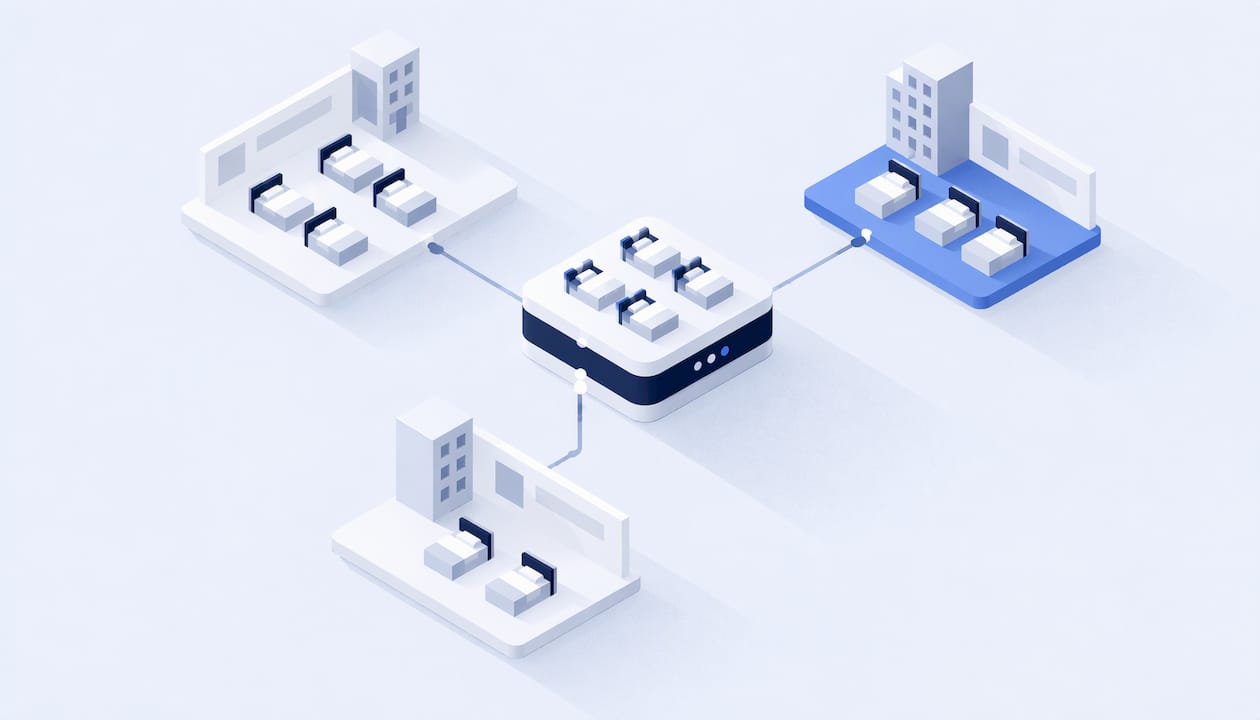
Hotel channel management is how you control where your rooms are sold, at what price, and how many rooms each place gets. A tool called a channel manager does the daily work. It links your property management system (PMS) to booking sites and keeps your rates and open rooms the same everywhere. But the tool is only half the job. You still need a plan for which channels to use and how to grow the one that pays you best: your own website.
This guide explains the basics in plain words. You will see the main channels, what each one costs you, and how to set up a simple plan. You will also see where direct bookings fit in.
Free with every demo
Get a website guests and AI both recommend.
- See your new AI-visible website on the call
- Social content made and posted for you
- The website is yours to keep, free
Key Takeaways
- A channel manager keeps rates and open rooms in sync across booking sites. A distribution strategy decides which sites you use in the first place.
- Online travel agencies (OTAs) usually charge 15% to 30% per booking. Direct bookings carry no commission.
- More channels is not always better. Pick a few that bring good guests at a fair cost.
- Direct sales are forecast to grow. Skift Research expects direct digital channels to pass OTAs by 2030.
- Guests now ask AI tools where to stay. A clear website and a strong Google Business Profile help you show up.
What hotel channel management means
A channel is any place a guest can book your room. Your website is a channel. So is the phone. So are big booking sites, travel agents, and search engines that show hotel prices.
Channel management means you decide three things:
- Which channels you sell on.
- How many rooms each channel can sell.
- What price each channel shows.
Then you watch the results and change the mix when demand changes.
The goal is simple. One industry paper says the aim is to put the right rooms in the most productive channels at the right time and price, so you attract the most profitable guests. Notice the word profitable. A booking that costs you 25% in fees is not the same as one that costs nothing.
Channel management and distribution strategy
People use these two terms side by side, but they are not the same thing.
- Distribution strategy is the plan. It picks the channels and sets the goals.
- Channel management is the daily work. It carries out the plan: rates, rooms, and rules.
Think of it like a road trip. The strategy is the map. Channel management is the driving.
A hotel distribution strategy, as Cvent describes it, is a plan for booking rooms at a profit through a mix of channels. The right plan depends on your price, your guests, your location, and how much marketing you can do.
What a channel manager does
A channel manager is software. It sits between your PMS and the booking sites. When a room sells on one site, the tool closes that room on the others. When you change a rate, it sends the new rate everywhere.
This helps in three big ways:
- No double bookings. One room cannot sell twice.
- Less typing. You change a rate once, not ten times.
- Fewer rate mistakes. Guests see the same price across sites.
That last point matters. If your direct rate is higher than an OTA rate, guests book on the OTA. You pay the fee. Keeping rates matched protects you.
What a channel manager does not do
A channel manager moves your rates and rooms. It does not decide your rates. It does not bring guests to your own website. It does not write your content, fix your Google listing, or call groups to sell blocks of rooms.
That is why many hotels have a tool but still rely too much on OTAs. The tool connects the channels. Someone still has to grow the best one.
The main channels for independent hotels
Each channel has a good side and a bad side. Here is a plain look at the common ones.
| Channel | What it is good for | What to watch |
|---|---|---|
| Big OTAs (Booking.com, Expedia) | Huge reach, fast bookings | Commission, discounts, more cancellations |
| Small or regional OTAs | Reach to a certain type of traveler | Lower volume |
| Metasearch (Google, Kayak, Trivago) | Shows your direct price next to OTA prices | You need a fair direct rate |
| GDS and corporate | Travel agents and business travel | Contracts and negotiated rates |
| Wholesalers | Extra sales in slow months | Your rates can leak to the public |
| Vacation rental sites (Airbnb, Vrbo) | Longer stays | Setup and tax rules |
| Your website and booking engine | Best margin, guest data is yours | You must bring in the traffic |
The table follows the trade-offs listed in a guide from a hotel software maker, which we cite here for the channel list only.
The OTA fee problem
OTAs are useful. They put your hotel in front of millions of people. But they take a cut. Most charge between 15% and 30% of each booking.
Here is a simple example. A guest books a $200 room through an OTA that charges 20%. You pay $40. You keep $160. If that same guest had booked on your website, you would keep the full $200 (before card fees and your own costs).
Now picture 500 room nights a year moving from OTA to direct at that rate. That is $20,000 you keep. This is why direct booking is the heart of a good plan.
Why OTAs can still help
We do not tell hotels to drop OTAs. New guests often find you there first. The smart move is to use OTAs for reach, then give guests a good reason to book with you next time. A clear website, a fair rate, and a friendly follow-up email do the work.
How many channels do you need?
There is no magic number. More channels can mean more bookings, but each one adds work and cost. A long list of weak channels is worse than a short list of strong ones.
A good rule: keep a channel only if it brings guests you want at a cost you can live with. Review each one every quarter.
There is one more reason to be careful. In the U.S., hotel demand grows slowly. One long study of the U.S. market found that demand grew about 1.6% a year over 20 years. The same study found that new channels mostly shift bookings around. They do not create many new guests.
The study also found that lower rates raised demand, but not enough to make up for the lower price. So deep discounts to fill rooms can cost you money. Rooms sold cheaply on many channels do not add up to more income.

How to build a distribution strategy
You do not need a big team. Follow these steps.
Step 1: Know your guests
Who stays with you? Business travelers? Families? Crews working on a nearby job? Sports teams? Each group books in a different way. Business guests may use corporate rates. Families may use OTAs or search. Groups often call or email.
Step 2: Check your current mix
Pull a report from your PMS. For the last 12 months, list your bookings by channel. For each one, write down:
- Number of room nights
- Average rate
- Commission or fee
- Cancellation rate
- What you kept after costs
You may find that one channel looks big but pays little.
Step 3: Set a goal
Pick one clear goal. For example: “Move 10% of bookings from OTAs to direct in 12 months.” A clear goal makes choices easier.
Step 4: Pick your channels and share rooms
Choose the channels that fit your guests. Give each a share of rooms. In slow months, you may open more to OTAs or wholesalers. In busy months, you may hold rooms back for direct sales at higher rates.
Step 5: Keep rates fair across channels
Your website should show the best rate, or at least an equal one. Add a small perk for direct guests, such as free parking or late checkout. A perk does not cut your rate, but it gives a reason to book direct.
Step 6: Test and adjust
Watch results each month. Change one thing at a time. Keep what works. Cut what does not.
Why direct bookings deserve more of your mix
Direct bookings keep your money and your guest data. You can email past guests. You can offer deals for return stays. You build a relationship that no OTA can take from you.
The trend is also moving your way. Skift Research said OTAs hold the biggest share of hotel gross bookings today. But by 2030 it expects direct digital channels to pass them, with more than $400 billion against $333 billion for OTAs.
To win direct bookings, your site needs to do a few things well:
- Load fast on a phone.
- Show real photos and clear prices.
- Let a guest book in a few taps.
- Answer common questions, like parking, pets, and check-in time.
- Show honest guest reviews.
Our guide to independent hotel marketing goes deeper on these steps.
AI search and your distribution plan
More travelers now ask AI tools for hotel ideas. They type a question and get a short list. If your hotel is not on that list, you lose the chance before the guest even sees an OTA.
One study of more than 300 booking journeys found that fewer than 10% of bookings were completed on OTAs, while 56% were made direct. The same report says that tuning your Google Business Profile for AI visibility is key.
What can you do now?
- Fill out every part of your Google Business Profile.
- Keep your name, address, and phone the same on every site.
- Write clear pages about your rooms, your area, and local events.
- Answer guest questions in plain words on your site.
- Ask happy guests for reviews, and reply to them.
We cover this in more detail in our posts on hotel LLM optimization and online brand visibility.
What a distribution strategy service covers
A channel manager is software you log in to. A distribution strategy service is people who help you plan and grow. The two work well together.
A good service usually helps with:
- Reviewing your channel mix and costs
- Setting direct booking goals
- Fixing your online listings and profiles
- Building a website that guests and AI tools can read
- Content and social posts that bring guests to your site
- Sales outreach to groups
This is the gap that software leaves open. The tool keeps rates in sync. The service helps you earn more of the bookings that cost you no commission.
How we help at HotelHero
We build our work around one goal: more commission-free bookings for independent hotels. Our Direct Booking System brings together three parts:
- A remote sales team that reaches out for group bookings.
- Social media work that builds your guest audience and sends guests to book direct.
- Online presence repair, including Google Business Profile work, OTA listing care, and review help. You can read more on our online presence repair page.
We also work on visibility in AI answers through GEO and AEO services. And we plan content around local events and travelers through our content marketing services. Our aim is a 30-day setup, and we back that with a deployment guarantee.
If you want to talk about your own channel mix, contact us.
Our perspective
Most hotels we meet have the tools. They have a PMS. They have a channel manager. Their rates sync well. And still, most of their bookings come from OTAs.
Why? Because software moves rates. It does not move guests. Nobody is out there telling your story to travelers, to AI tools, or to the group planner who needs 20 rooms next month.
We think channel management should end in one place: your own front door. Every channel you use should feed back to your website, your guest list, and your relationships. OTAs bring the first stay. Your direct system should win the second, the third, and the group deal.
That is why we pair a website that AI tools can read with social content, a sales team, and a clean online presence. An independent hotel should not need a large marketing staff to do this. It needs a partner who knows hotels and does the work every week.
Chirag
FAQ
What is the difference between a channel manager and a booking engine?
A channel manager sends your rates and open rooms to outside booking sites. A booking engine is the tool on your own website that lets guests book direct. Most hotels need both. One handles the outside channels, and the other handles your own.
Do I need a channel manager if I only have a few rooms?
If you sell on more than one site, a channel manager helps stop double bookings and saves time. It matters more as you add channels. Your PMS provider can tell you what it connects to.
How much do OTAs charge hotels?
Most OTAs charge about 15% to 30% of the booking value. The exact rate depends on your deal with each site. Check your contract to see your own rate.
How can I get more direct bookings?
Start with a fast, clear website and a full Google Business Profile. Add a small perk for direct guests and email past guests with return offers. Social posts about local events can also send new guests to your site. Our post on hotel social media marketing shows how.
What is a hotel distribution strategy?
It is your plan for which channels sell your rooms, how many rooms each gets, and at what price. A good plan aims for steady bookings at a healthy profit. You review it often and change it as demand shifts.
Sources
- How to Choose and Manage the Right Booking Channels (Hospitality Net)
- How to Increase Direct Hotel Bookings: 13 Strategies (NetSuite)
- Hotel Distribution Outlook 2024 (Skift Research)
- Hotel Distribution Channels: The Complete Guide (Cvent)
- Distribution Channel Analysis (HSMAI)
- Channel management and distribution (ISHC)
- Direct bookings dominate as OTAs face disruption from AI mode (Travel Daily News)
- What is a Channel Manager? (channel types and trade-offs)