· 10 min read
Hotel AI Discovery: How Guests Find Your Hotel With AI
Guests now ask AI to find and compare hotels. Learn how hotel AI discovery works and the steps an independent hotel can take to get found and booked direct.

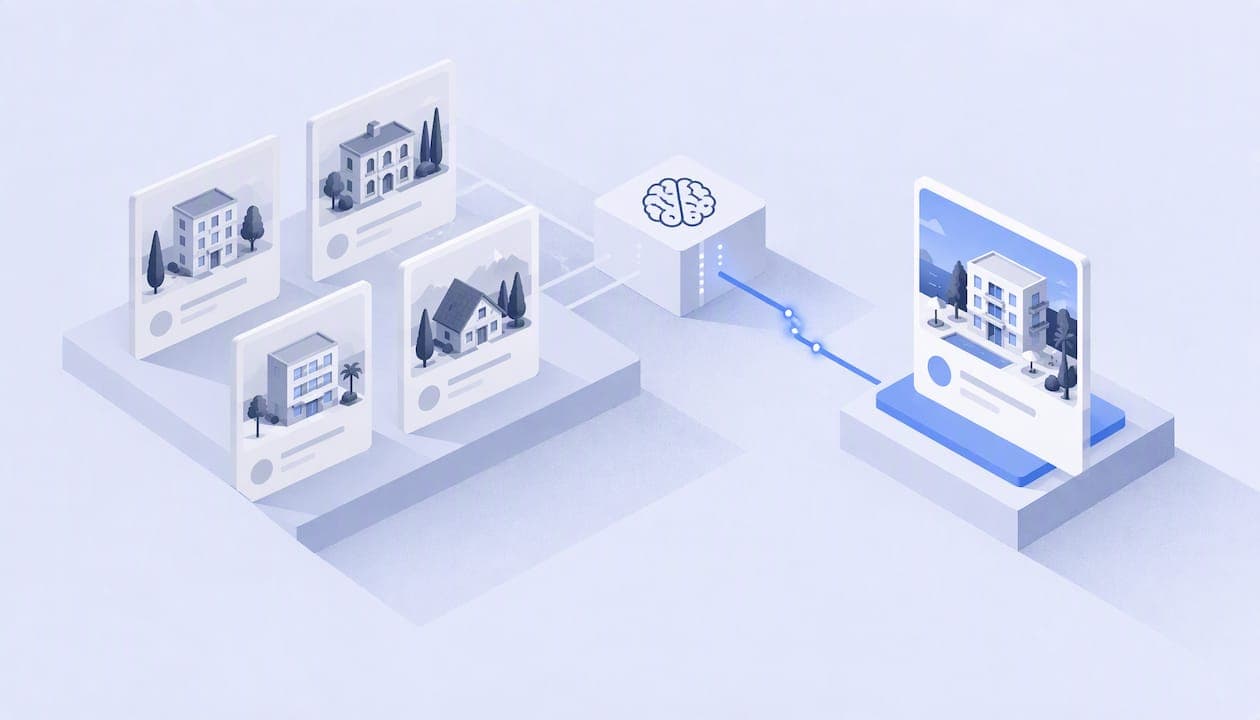
Hotel AI discovery is when a traveler asks an AI tool to find a place to stay, and the tool picks a few hotels to show. The guest may never see a list of ten blue links. If your hotel is not one of the few the AI names, that guest may never know you exist. The good news is that you can improve your odds. This guide shows how AI discovery works, what the research says, and what an independent hotel can do this quarter.
Free with every demo
Get a website guests and AI both recommend.
- See your new AI-visible website on the call
- Social content made and posted for you
- The website is yours to keep, free
Key Takeaways
- Travelers now describe a trip in plain words and get hotel picks, reviews, and even booking help from AI.
- In one 2026 test, guest rating and price had the biggest effect on which hotels an AI model picked.
- Fresh reviews, clear website content, and the same facts everywhere help AI understand your hotel.
- Check which booking links show up in AI answers. Make sure your own booking page is easy to use.
- AI discovery can help you get more direct bookings, but only if the AI can find and trust your hotel first.
What hotel AI discovery means
For many years, a guest typed a search and got a list. The guest clicked, compared, and clicked again. Often the guest ended up on a big travel site.
Now the guest can talk to an AI tool. The guest says something like, “Find a quiet hotel near the lake with a pool and free parking for four people.” The AI answers with a short list. It may add reviews and details that help the guest choose.
That is hotel AI discovery. The AI acts like a digital concierge. It reads, sorts, and suggests.
For a hotel owner, this changes the goal. You still want to rank in search. But you also want an AI tool to understand who you are, who you are for, and why guests like you.
How travelers use AI to find and compare hotels
The numbers are growing fast. A September 30, 2026 survey of 4,000 travelers in the U.S., U.K., and Australia found that 67% had used AI in travel searches. That is two out of three.
But trust is a different story. The same survey found that only 14% would let AI book a hotel stay on its own. So most guests use AI to explore and compare. They still want to check the facts before they pay.
This matters for you. The guest who asks AI for ideas is early in the trip plan. If you show up here, you get a chance to win the booking later.
Google AI Mode
Google now lets travelers describe a trip in AI Mode. They can see hotel options with guest reviews and ways to compare. Google says that hotel booking in AI Mode is rolling out in the U.S., with hotel chains and online travel sites as partners.
That means a guest can find a hotel and start a booking inside one chat. The hotel that is easy to understand has an edge. The hotel that is hard to read may be skipped.
Chat apps from hotel brands
Big hotel brands are building for AI too. Wyndham launched a native ChatGPT app on May 6, 2026. Users can explore its hotels with maps, amenity filters, and hotel cards.
Think about what those cards show: photos, amenities, and location. Guests judge a place by how it looks in a small card. Clean, bright, true photos help. Many owners use AI-powered hotel photo enhancement to fix dark or crooked photos while keeping the real property.
An independent hotel does not need its own app. But it does need to give AI tools clear facts and good pictures to work with.
What AI looks at when it picks a hotel
No one outside the AI companies knows the full recipe. But researchers have started to test it.
One 2026 study ran a randomized audit of how large language models choose hotels. It found that guest rating and price had the largest effects. Eco-certification and the number of reviews also helped, but less. The order in which hotels were listed to the AI changed what it recommended too.
Here is what that tells you in plain words:
- Rating: A strong guest score is the top signal.
- Price: A fair price for what you offer matters a lot.
- Reviews: More reviews help a little. So do trust signals like eco-certification.
- Position: Where you appear in a list can sway the answer.
Another source says AI systems also look at review volume and recency when they decide which hotels to show. A hotel with many recent reviews looks alive. A hotel with old reviews can look stale.
This is a test of one setup, so treat it as a guide and not a law. AI tools change often. But the pattern is clear. AI wants proof that guests like you, and it wants clear facts.
A simple checklist to get found by AI
Here are steps any independent hotel can take. None needs a big team.
1. Fix the basics everywhere
AI pulls facts from many places. If your name, address, phone number, and hours differ from site to site, the AI may get confused. Pick one correct version and use it everywhere.
Start with your Google Business Profile. Then check your listings on travel sites. Make sure room types, amenities, and photos match your website.
2. Ask for reviews, all year long
Reviews are your best proof. Ask happy guests to leave one soon after checkout. Keep it steady. A few new reviews each week beat a big burst once a year.
Answer reviews too, good and bad. A kind, calm reply shows that real people run the place.
3. Write clear words on your website
AI reads text. If your best details are only inside pictures or a slow pop-up, the AI may miss them.
Write plain pages that answer what guests ask. Is there parking? Are pets welcome? How far is the airport? Is breakfast included? What is nearby?
Guests also search by type of trip. Think “romantic weekend,” “family stay,” or “work trip.” Say who your hotel is best for, and show why. Our guide on hotel LLM optimization goes deeper on this.
4. Show what makes you different
AI tends to repeat what is clear and specific. “Nice rooms near downtown” is easy to skip. “Renovated rooms, a rooftop view of the river, and a five minute walk to the farmers market” is easy to repeat.
Use local detail. Name the events, trails, and spots that bring guests to your town.
5. Keep photos honest and bright
Hotel cards and AI answers lean on pictures. Use clear, well lit photos that show the real room. Refresh them when you renovate or when the season changes.

6. Make your own booking page easy
When a guest is ready, your direct page must be fast and simple. Experts say hotels should make sure their direct booking experience is as smooth as OTA checkouts. If the guest has to fight your site, they will go back to a big travel site.
How to check if AI knows your hotel
You do not need fancy tools to start. Try this once a month.
- Open a few AI tools and search tools.
- Ask the way a guest would. For example: “best small hotel near [your town] for a family weekend.”
- Write down which hotels show up, and in what order.
- Check if your hotel is named. Check if the facts about it are right.
- Look at which booking links appear. Is yours there, or only a travel site’s?
The same experts suggest that hotels audit which booking links appear in AI answers. That one habit shows you where you stand.
Keep a simple sheet with the date, the question, and the result. Over a few months you will see if your work is paying off.
What to measure
| What to track | Why it matters |
|---|---|
| Is your hotel named in AI answers? | Shows if you are seen at all |
| Are the facts right? | Wrong hours or amenities cost bookings |
| Which booking link shows? | Direct link means no commission |
| Review count and recent reviews | Fresh proof helps AI trust you |
| Direct booking share | Shows if the work pays off |
Can AI discovery cut your OTA costs?
It can help. Here is how.
When a guest finds you in an AI answer and goes to your own page, you may skip the commission. The guest also learns your name, which helps if they come back later.
But AI can also send guests to travel sites. Google says travel sites are among its partners for AI Mode booking. So winning direct bookings takes work. You need strong facts, strong reviews, and a booking page that wins when the guest arrives.
Also remember that guests are careful. Since only 14% would trust AI to book alone, many will check your site before they pay. Your website is still the place where the deal is made.
Our guide on independent hotel marketing shows how these pieces fit with the rest of a direct booking plan. And if you want to know how people find you outside of AI, read about hotel online brand visibility.
Where social content fits in
AI learns from the open web. Social posts, guest photos, and local content can add to the picture of who you are. Posts about local events and real guest stories give your hotel a voice that is easy to describe.
That is also good for guests who have not heard of you yet. A steady stream of posts can build an audience that books direct. Read more in our guide to hotel social media marketing.
Our perspective
Most independent hotels do not have a marketing team. They have an owner, a front desk, and a long to-do list. That is why AI discovery feels scary. It feels like one more thing.
We see it another way. AI is a chance for a small hotel to be seen next to the big names. The AI does not care how large your ad budget is. It cares if your facts are clear, your guests are happy, and your story is easy to tell.
That is how we built our service. We pair an AI-visible website with steady content, so the AI has real things to read and repeat. We add online presence repair, such as Google Business Profile work, listing cleanup, and review help, so your facts match everywhere. Our goal is simple: more commission-free bookings.
We also believe in doing the work, not just the advice. Our approach is designed to give a hotel a working setup fast, and we stand behind a 30-day deployment guarantee. Then we keep the content fresh, because AI rewards a hotel that stays active.
If you do one thing this week, ask an AI tool about your hotel and read the answer. You will learn more in five minutes than in a month of guessing.
Chirag
How HotelHero can help
If you want help, we build AI-visible websites for hotels. Our work covers Generative Engine Optimization (GEO) and AI Engine Optimization (AEO), so AI tools can read and recommend your hotel. We also run online presence repair for your Google profile, listings, and reviews.
Want to see how it would look for your hotel? Book a demo and we will walk you through it.
A 30 day plan you can start today
You can make real progress in one month.
Week 1: Look and list. Ask AI tools about your hotel. Write down what they say. List every wrong fact.
Week 2: Fix the facts. Update your Google Business Profile and travel site listings. Match your website to them. Fix photos that look dark or messy.
Week 3: Improve your site. Add clear pages for parking, pets, nearby spots, and trip types. Make sure your booking page loads fast on a phone.
Week 4: Build proof. Start a steady review habit. Reply to recent reviews. Post one or two local stories on social media.

Then repeat the check from week 1 and compare. Do this monthly. Small steady work adds up.
Common mistakes to avoid
- Waiting. Guests are using AI now. Early work gives you time to learn.
- Different facts in different places. This confuses people and machines.
- Old reviews only. A hotel with no new reviews looks quiet.
- A hard booking page. You may win the click and lose the guest.
- Copying big brands. You cannot out-spend them. Be clear, local, and specific instead.
FAQ
Can AI make hotel reservations?
In some cases, yes. Google says hotel booking in AI Mode is rolling out in the U.S. with hotel chains and travel sites as partners. But guests are still careful. In one survey, only 14% said they would trust AI to book a hotel stay on its own.
What do AI tools look at when they suggest a hotel?
No one knows every signal. One 2026 test found guest rating and price mattered most, with eco-certification and review count helping a bit. Other reports say review volume and recency also count. Clear website content and matching facts across the web help too.
How can a small hotel show up in AI answers?
Start with the basics. Keep your name, address, and details the same everywhere. Collect fresh reviews, write clear pages about your hotel and your area, and use honest photos. Then check AI tools each month to see what they say about you.
How do I know if AI is helping my direct bookings?
Ask AI tools questions your guests would ask and note which booking links appear. Then watch your direct booking share over time. If your own link shows up more and direct bookings rise, the work is paying off.
Sources
- How to book travel with AI Mode in Google Search
- Wyndham Launches Native ChatGPT App
- Whose hotel does the AI recommend? An algorithm audit
- How Travelers Use AI to Choose Hotels
- Hotels risk invisibility as AI reshapes travel discovery
- Google Just Started Booking Hotels Inside AI