· 9 min read
Hotel Online Brand Visibility: How Independent Hotels Get Found
Learn how independent hotels build online brand visibility across search, reviews, social and AI answers, and turn it into commission-free direct bookings.

Hotel online brand visibility is how often, and how accurately, your property shows up when travelers look for a place to stay: in Google results, on maps, in reviews, on social feeds and now inside AI answers. For an independent hotel, the goal is simple. Travelers should know your name before they reach an online travel agency (OTA), so the booking lands on your own site instead of paying a commission. This guide covers the channels that matter, a practical order of work, and the numbers to track.
Free with every demo
Get a website guests and AI both recommend.
- See your new AI-visible website on the call
- Social content made and posted for you
- The website is yours to keep, free
Key Takeaways
- Visibility comes before conversion: a traveler who has never heard of your hotel will book wherever the listing happens to appear, usually an OTA.
- Search, social, reviews and AI assistants all feed each other. A weak profile on one channel often undermines the rest.
- AI tools pull from third-party sources, so your OTA listings, reviews and Google profile now shape what travelers are told about you.
- Track share of voice, direct booking share and mobile conversion, not just followers or traffic.
- Fix the foundation first (accurate listings, fast mobile booking engine), then add social and AI-focused content.
What online brand visibility means for an independent hotel
Visibility is not the same as traffic. It is the share of relevant moments in which your hotel is present: a search for “boutique hotel near the river,” a map lookup, a friend’s Instagram post, a question typed into an AI assistant. Each of those moments either includes your name or it does not.
The link to direct bookings is awareness. One industry guide frames it this way: when travelers know a hotel exists before they get to an OTA, the conditions for a direct booking exist, and a fast, mobile-friendly, low-friction booking experience then converts that awareness. Without the first step, the second has nobody to convert.
Chains have an advantage here because a brand name does the work for them. An independent has to earn the same recognition through consistent presence, which is a more manageable job than it sounds once you break it into channels.
Where travelers actually discover hotels

Travelers do not use one channel. In Expedia Group’s U.S. path-to-purchase research from 2023, 79% of travelers used OTAs, 75% used social media and 65% used search engines along the way. Booking.com’s Travel Trends 2024 findings point the same direction: travelers prioritize word of mouth (45%), social media (39%) and search results (35%) when planning.
The practical reading: your hotel needs to appear in several places, and the story has to match everywhere. A traveler who sees a polished Instagram feed, then finds an outdated Google profile and a three-year-old OTA photo set, loses trust quickly.
| Channel | What it does for visibility | What to get right first |
|---|---|---|
| Google search and maps | Captures people already looking for a stay in your area | Accurate Business Profile, fast site, clear page per room type |
| Social media | Builds recognition before the search happens | Consistent posting, real guest content, a path to your booking page |
| Review platforms | Provides proof and feeds AI answers | Steady review flow, replies to every review |
| OTA listings | Reach plus raw data that AI tools read | Current photos, amenities and descriptions |
| AI assistants | Answers travel questions directly | Structured, consistent information across the web |
| Email and past guests | Brings repeat guests straight to you | Collecting addresses at check-in and checkout |
The new layer: AI-powered discovery
This is the shift most hotel marketing guides written before 2025 miss. In a 2025 HSMAI Asia presentation, the authors report that 33% of travelers say AI is their primary search method for hotel discovery, and that AI engines lean heavily on sources such as Reddit, TripAdvisor and reviews.
Where do those answers come from? One U.S. analysis of AI hotel recommendations found that intermediaries such as OTAs and metasearch sites supply about 44% of them, editorial travel sites 38% and community or social platforms 33%. The same analysis found individual hotel websites cited in only about 6% of recommendations, with large chains favored. Treat these as directional, since the method is a single vendor’s analysis, but the lesson is consistent with the HSMAI material: the AI picture of your hotel is assembled from other people’s pages.

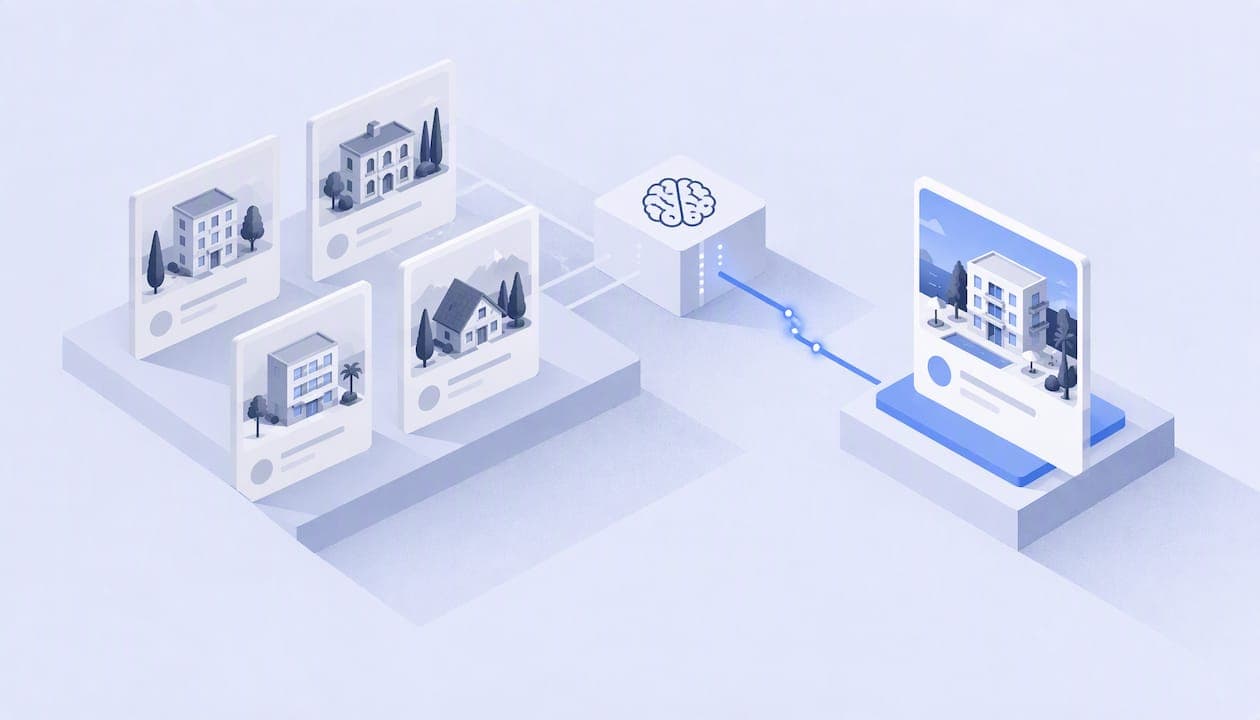
That has a useful consequence. An accurate, well-managed OTA profile can act as raw data that informs AI recommendations, which may then send travelers to book on your own website. Managing OTA listings is no longer only a distribution chore. It is part of how you get described.
What GEO means in plain terms
Generative engine optimization (GEO), sometimes called AI engine optimization (AEO), is the work of making your hotel easy for AI systems to find, understand and recommend. According to HSMAI Asia, it rests on a solid SEO foundation: structured data, in-depth content and customer testimonials that mirror the way people phrase natural questions.
In practice for a 60-room independent, that means:
- Pages that answer real questions in the words guests use (“Is there parking near the convention center?” “Which rooms allow dogs?”).
- Structured data on your site so machines can read rooms, amenities, address and policies.
- Identical facts everywhere: name, address, phone, check-in times, amenities, photos.
- Guest reviews that mention specifics, such as the breakfast, the quiet rooms or the walk to the venue.
Build the foundation: website, search and local presence
Before social campaigns or AI tactics, check the basics. They carry the most weight and cost the least to fix.
Your website and booking engine
Mobile matters most. One 2026 guide puts mobile at 50% of hotel bookings, which makes a slow or clunky booking engine an expensive leak. Test your own booking path on a phone: how many taps from the homepage to a confirmed room? Every extra step costs you bookings you already earned.
Give guests reasons to book direct as well. Perks such as a late checkout, a welcome drink or a flexible cancellation window cost you far less than a commission. Other lodging operators make the same case to travelers, for example this explainer on reasons to book direct, and your site should state yours plainly at the point of booking.
Organic and local search
Position still matters: industry research cited by Booking.com notes that 27.6% of users click the first Google result. For a hotel, the first result often comes from the map pack, not the blue links, so your Google Business Profile deserves the same attention as your homepage.
A short checklist:
- Claim and verify your Google Business Profile, and confirm the category, address, hours and phone are right.
- Upload recent, real photos of rooms, lobby, exterior and neighborhood.
- Fill in every amenity and attribute that applies.
- Add your direct booking link wherever the profile allows it.
- Create separate site pages for rooms, meeting space, groups and local attractions, each with unique text.
- Keep the same details on OTAs, directories and social profiles.
If your site and profiles are in poor shape, a structured cleanup is often the fastest win. That is the thinking behind our online presence repair service.
Social media, paid promotion and reputation
Social media builds familiarity. The point is not viral reach. It is that when someone later searches your city, your name already feels known. Guest photos, staff stories, local events and seasonal offers all work better than generic stock imagery, and every post should connect back to a page where the guest can book direct.
Word of mouth ranks first in the Booking.com figures above, and reviews are its online form. Three habits help:
- Ask every guest for a review, at checkout or by email a day or two after.
- Reply to every review, positive or negative, in a calm and specific voice.
- Reuse genuine guest content (with permission) on your site and social channels.
Because AI tools cite review platforms heavily, steady reviews do double duty: they persuade people reading them and they inform the systems summarizing you.
Paid promotion fits best after the foundation is solid. Branded search ads and retargeting for people who visited your booking page can protect direct bookings that an OTA ad would otherwise intercept. Spend on paid social once your landing pages convert, not before.
A 90-day order of work
| Weeks | Focus | Output |
|---|---|---|
| 1 to 2 | Audit | List of every listing, profile and page with wrong or missing facts |
| 3 to 4 | Fix the basics | Google Business Profile, OTA content and website details aligned |
| 5 to 6 | Booking path | Mobile booking test, direct-booking perks displayed, page speed fixed |
| 7 to 10 | Content | Question-led pages, structured data, guest stories |
| 9 to 12 | Social and reviews | Posting rhythm, review request flow, reply routine |
| 12 onward | Measure | Monthly review of the metrics below |
Metrics that show visibility is working
Follower counts feel good and prove little. Better measures connect visibility to bookings:
- Share of voice. Divide your brand’s mentions by total market mentions and multiply by 100. eHotelier describes it as a way to refine strategy, grow direct bookings and cut reliance on third-party platforms. Define your market as your closest competitive set in your city.
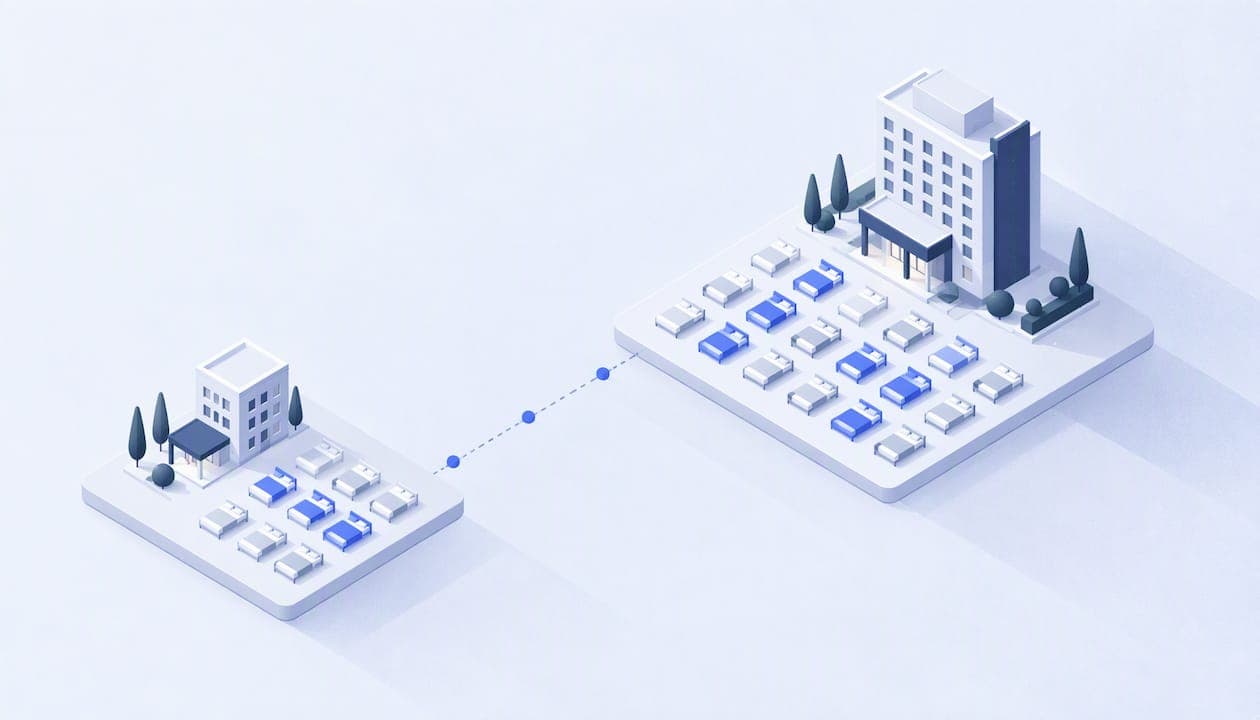
- Direct booking share. Direct revenue divided by total room revenue, tracked monthly.
- Branded search volume. Rising searches for your hotel’s name suggest awareness is growing.
- Google Business Profile actions. Calls, direction requests and website clicks.
- Mobile conversion rate. Booking engine sessions that end in a reservation.
- AI mentions. Ask the major AI assistants a set of typical guest questions each month and note whether, and how, your hotel appears.
Keep a simple monthly sheet. Trends over three to six months tell you more than any single week.
Our perspective
We have spent more than 20 years in hospitality, and the pattern is steady: independent hotels lose direct bookings long before a guest reaches a booking page. They lose them at the moment of discovery, when the OTA is the only name on screen.
That is why we treat visibility and sales as one system. A clean Google profile, accurate OTA listings, active social channels and a booking path that works on a phone all feed one another, and AI search now rewards exactly that consistency.
We also believe visibility without outreach leaves money on the table. A dedicated sales team working group business, and a social presence built to bring guests to your own site, turn awareness into commission-free revenue. Our Direct Booking System is designed to put those pieces together for independent hotels, with a 30-day deployment guarantee.
Chirag
How HotelHero can help
If you would rather not run all of this alongside daily operations, we build it for you. Our Direct Booking System combines a remote sales team for group bookings, social media management to build your guest audience and booking funnels, and online presence repair covering Google Business Profile, OTA listings and reviews. We also work on GEO and AEO so your hotel is easier for AI tools to describe correctly.

To see how it would fit your property, talk to our team.
FAQ
How long does it take to improve a hotel’s online visibility?
Basic fixes such as correcting listings and updating your Google profile can show results within weeks. Reviews, content and social recognition build over several months. Plan for a 90-day first push, then monthly measurement.
Do OTAs hurt or help my visibility?
They help reach, and their listings also feed the data AI tools read about you. The aim is to keep those listings accurate while giving travelers clear reasons to book on your own site, so the booking itself comes without commission.
What is the difference between SEO and GEO for hotels?
SEO aims to rank your pages in traditional search results. GEO aims to make your hotel understood and recommended by AI assistants. GEO builds on SEO: structured data, in-depth content and consistent third-party information serve both.
Which metric should an independent hotel track first?
Start with direct booking share, because it ties visibility to revenue. Add share of voice and branded search volume to see whether awareness is growing before bookings follow.
Sources
- Hotel Marketing Guide: Drive Direct Bookings
- Expedia Group path-to-purchase report (U.S., 2023)
- Booking.com: Travel trends, 5 channels to boost your hotel marketing
- HSMAI Asia: Beyond Google, how hotels can win in the age of ChatGPT and AI search
- Hotel Travel SEO: Which Hotels ChatGPT Recommends
- Hotel Management: OTA listings now shape how AI recommends hotels
- eHotelier: Leveraging share of voice to maximize direct bookings
- Direct Booking Vacation Rentals: Save Money and Stay Safe