· 8 min read
Hotel Revenue Growth: A Plan for Independent Hotels
Hotel revenue growth for independents: where the market stands, how to find why rooms sit empty, and how direct bookings lift revenue without deep rate cuts.
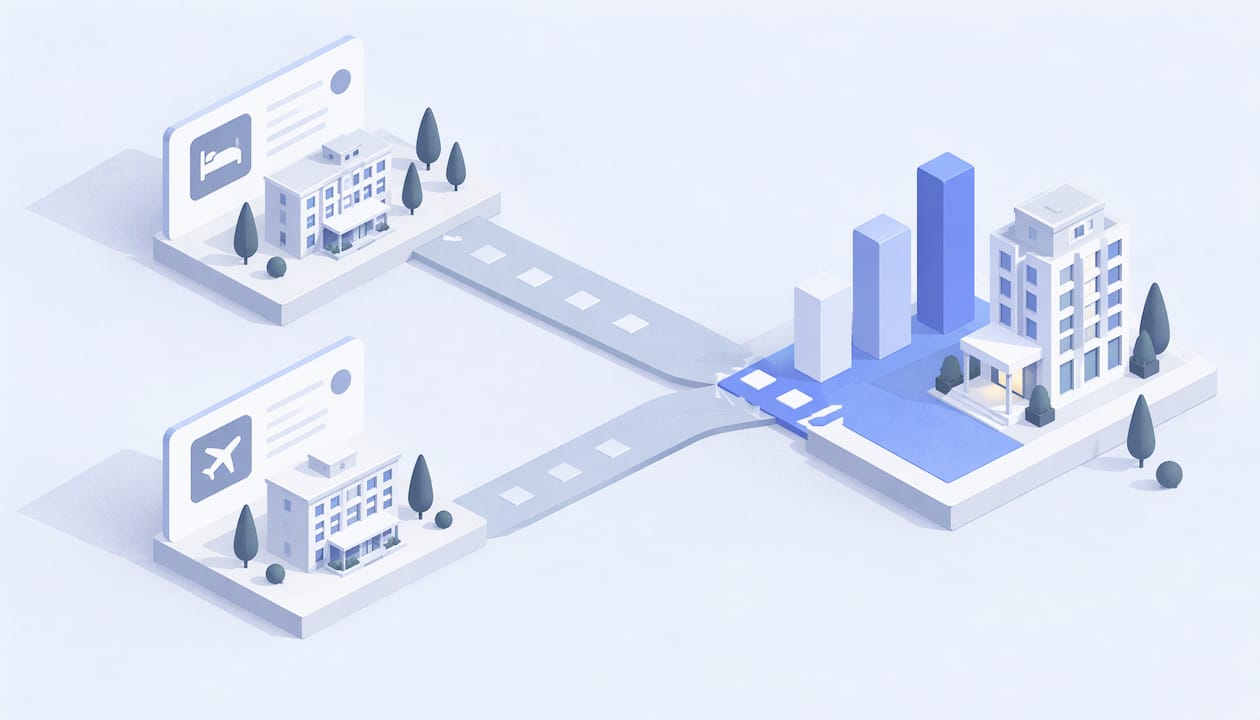
Hotel revenue grows when you fill more rooms at a good rate and keep more of each booking. For an independent hotel, the biggest lever is often the booking channel. Every guest who books direct saves you a commission and gives you a guest you can win back. That is why we build direct booking systems for independent hotels at HotelHero.
This guide shows where the U.S. market stands, how to find out why your rooms sit empty, and which moves lift revenue without deep rate cuts.
Free with every demo
Get a website guests and AI both recommend.
- See your new AI-visible website on the call
- Social content made and posted for you
- The website is yours to keep, free
Key Takeaways
- U.S. hotel revenue per available room (RevPAR) is rising in 2026, but independents are lagging the market, so a plan matters more than a rising tide.
- Direct bookings cost less than OTA bookings and cancel less often, which means more of each dollar stays with you.
- You can fill empty rooms with short, targeted offers and added value instead of across-the-board price cuts.
- Guests now find hotels through AI tools as well as search, so your website and listings must be easy for those tools to read.
- Track occupancy, average daily rate (ADR) and RevPAR together, by booking channel.
Where the U.S. Market Stands in 2026
Three numbers describe hotel performance. Occupancy is the share of rooms sold. ADR, or average daily rate, is the average price paid per sold room. RevPAR, or revenue per available room, is occupancy times ADR. It shows how well all your rooms, sold or not, earn.
The 2026 picture is strong at the national level. Cushman & Wakefield found that RevPAR rose 7.1% in Q3 2026, with occupancy at 67.7% and ADR at $169. That was the best quarter since early 2023. Big cities led: Washington, D.C. was up 17.8%, Philadelphia 17.5% and Chicago 15.6%. Las Vegas was the one top-25 market that fell.

Looking ahead, PwC expects RevPAR growth of 5.0% for 2026 and a slowdown to 3.0% in 2027. The same report notes that, after inflation, RevPAR has grown about 2.0% a year since 1994 while core inflation ran 2.1%. In plain words, hotels have rarely gained real pricing power. Growth has to come from your own choices.
Why a rising market does not lift every hotel
Independents often miss the gains. HotelData’s first-half 2026 report found that independent hotels grew RevPAR 3.3% while luxury properties grew 15.9%. Cloudbeds, using 90 million bookings, found U.S. independent RevPAR fell 4.4% in its 2026 report, and OTAs held 63.4% of independent bookings worldwide.
The national occupancy story is also mixed. The AHLA says 2025 ended with U.S. occupancy of 62.3%, and about 75% of submarkets were still below 2019 occupancy. If your hotel sits in one of them, low occupancy is a local problem you can work on.

Find Out Why Your Rooms Are Empty
Do not cut rates until you know the cause. Low occupancy usually comes from one of four places. Work through them in order.
- Demand. Compare your occupancy to nearby hotels and to your own last year, by month. If the whole area is soft, the cause is the market. If only you are soft, it is something you control.
- Visibility. Search for your hotel and for “hotels near” your main draws. Check Google Business Profile, your website and your OTA pages. Missing hours, old photos or thin descriptions cost clicks.
- Conversion. Count visitors to your booking page and the share who book. Many visitors with few bookings points to a slow site, a hard booking form or a price that looks higher than the OTA.
- Mix. Break bookings out by channel. If OTAs bring most of your guests, you pay a commission on most of your revenue. Mordor Intelligence puts OTA commissions at 15 to 25% in the U.S. luxury segment, and the same range is a useful guide for planning.
Write down what you find. One clear cause beats five guesses. We cover the booking-page side in more depth in our guide to hotel website conversions.
Check the right numbers every month
Track these side by side: occupancy, ADR, RevPAR, and the share of bookings by channel. Add the cancellation rate by channel. Cloudbeds found OTA cancellations ran 21.8% against 10.6% for direct bookings, so a direct booking is also a steadier booking. HotelData’s Q3 2026 report shows why profit matters too: gross operating profit per available room rose 7.8% to $80.75. Revenue is only useful if costs stay in check.
Fill Empty Rooms Without Cutting Your Rate
A lower rate is the fastest move and the hardest to undo. Guests learn it, and your ADR drops for good. There are better tools.
Add value instead of discounting
PwC says hotels do not have to slash room rates to win price-sensitive guests. Perks like free parking or breakfast, flexible cancellation, upgrades and longer-stay discounts lower what a guest feels they pay while the room rate holds. Think about what costs you little and feels big to the guest.
Use short, targeted offers for last-minute rooms
Booking.com’s partner guidance says nearly 18.5% of peak-season bookings come less than two days before arrival. It suggests last-minute deals, short 48-hour offers and free upgrades for loyal guests instead of broad cuts. It also says to check minimum-stay rules, because they can hide your hotel from one-night searches. Run these offers on your own site first, where you keep the full rate. Our post on hotel booking promotions shows how.
Go after group business
Groups fill many rooms with one decision. Work crews, sports teams, wedding parties and event travelers all book blocks. Outreach to these buyers takes time most owners do not have. Our Construction Crew Prospecting service is built for that kind of group sales outreach.
Win More Direct Bookings
Direct booking is the core of independent hotel revenue growth. The math is simple. Mordor Intelligence reports that hotel websites produced an average booking value of $516 in 2025, against $312 through OTAs. A higher booking value and no 15 to 25% commission add up quickly.
Why do guests choose to book direct? A 2026 peer-reviewed study of 512 U.S. consumers in the Journal of Hospitality and Tourism Insights found that monetary savings drive direct-booking attitudes. A 20% discount paired with a free room upgrade raised booking intent among value-minded guests. You can pay for a perk like that from the commission you save.
Three habits make direct booking work:
- A clear reason to book direct. Show the perk or rate benefit at the top of the booking page.
- A fast, simple booking path. Fewer steps, mobile first, clear total price.
- A guest list. Collect emails and follow social accounts so you can invite guests back without paying a middleman.
For a full plan, read our direct booking strategy for independents and the independent hotel marketing playbook. Owners who run vacation-style properties will also find this direct booking guide for cabin stays a handy look at the guest side of the choice.
Be Easy to Find in AI Search
More travelers now ask AI tools where to stay. Cloudbeds CEO Adam Harris said in the 2026 report release that with AI changing discovery and OTAs gaining ground, independent lodging has never needed clarity more. Clarity here means plain facts: room types, location, amenities, nearby events, current reviews and a site that answers common questions.
This work is called Generative Engine Optimization (GEO), or AI Engine Optimization (AEO). It means shaping your site and listings so AI tools can read them and name you. Our AI visibility services cover GEO and AEO for hotels. Keep your Google Business Profile and OTA listings accurate too, since those feed what guests see. Our online presence repair service covers Google Business Profile optimization, OTA listings and reviews.
Keep Guests Coming Back With Content
Social posts about local events and real guest stories build an audience you own. Content that ties your hotel to what is happening nearby gives travelers a reason to pick you. User-generated content, such as guest photos, adds trust. See our content marketing services and our social media management page.
What HotelHero Offers
We built the Direct Booking System for independent hotels that want more commission-free bookings without a large marketing team. It combines a remote sales team for group bookings, social media to grow your guest audience and direct booking funnels, and online presence repair. Our positioning includes a 30-day deployment guarantee. See the Direct Booking System or get in touch.
Our Perspective
Most independent owners do not have a demand problem alone. They have a channel problem. The rooms sell, but too much of the money leaves as commission, and the guest belongs to someone else.
We believe revenue growth for an independent starts with owning the booking. That means a site that AI tools and travelers can read, a social audience built around your local events, and a sales effort that goes after group business, not just waiting for it.
Big brands have whole teams for this. Independents can get the same reach with a service built for hotels. That is the idea behind our work: deep hospitality knowledge, proactive outreach and one joined-up system focused on commission-free bookings.
Chirag
FAQ
How can I increase hotel revenue fast?
Start with short, targeted offers for open dates and a clear perk on your direct booking page. Check minimum-stay rules that may hide your rooms. These moves lift occupancy without lowering your standard rate.
How do I fill empty hotel rooms?
Find the cause first: demand, visibility, conversion or channel mix. Then add value such as parking, breakfast or an upgrade, and go after group business like crews and event travelers. Last-minute deals on your own site help fill the final days.
Is the hotel industry growing?
In 2026, yes. U.S. RevPAR rose 7.1% in Q3 and PwC forecasts 5.0% for the year, with slower growth of 3.0% in 2027. Independents have grown more slowly than luxury hotels, so your own plan counts.
Why do direct bookings earn more than OTA bookings?
They avoid commissions, which Mordor Intelligence puts at 15 to 25%, and they show a higher average booking value. They also cancel less often, at 10.6% versus 21.8% for OTAs in the Cloudbeds data.
Sources
- Cushman & Wakefield Q3 2026 U.S. Hospitality MarketBeat
- PwC US Hospitality Directions, November 2026
- HotelData H1 2026 Hotel Profitability Report
- HotelData Q3 2026 US Hotel Profitability Report
- Cloudbeds report on the independent hotel performance divide
- AHLA 2026 State of the Industry Report
- Mordor Intelligence United States Luxury Hotel Market
- Journal of Hospitality and Tourism Insights study on direct online hotel bookings
- Booking.com for Partners on filling last-minute availability